American Walnut Cocoa
Cocoa-brown American walnut engineered planks with smooth grain and a natural-oil direction.
Explore american walnut cocoa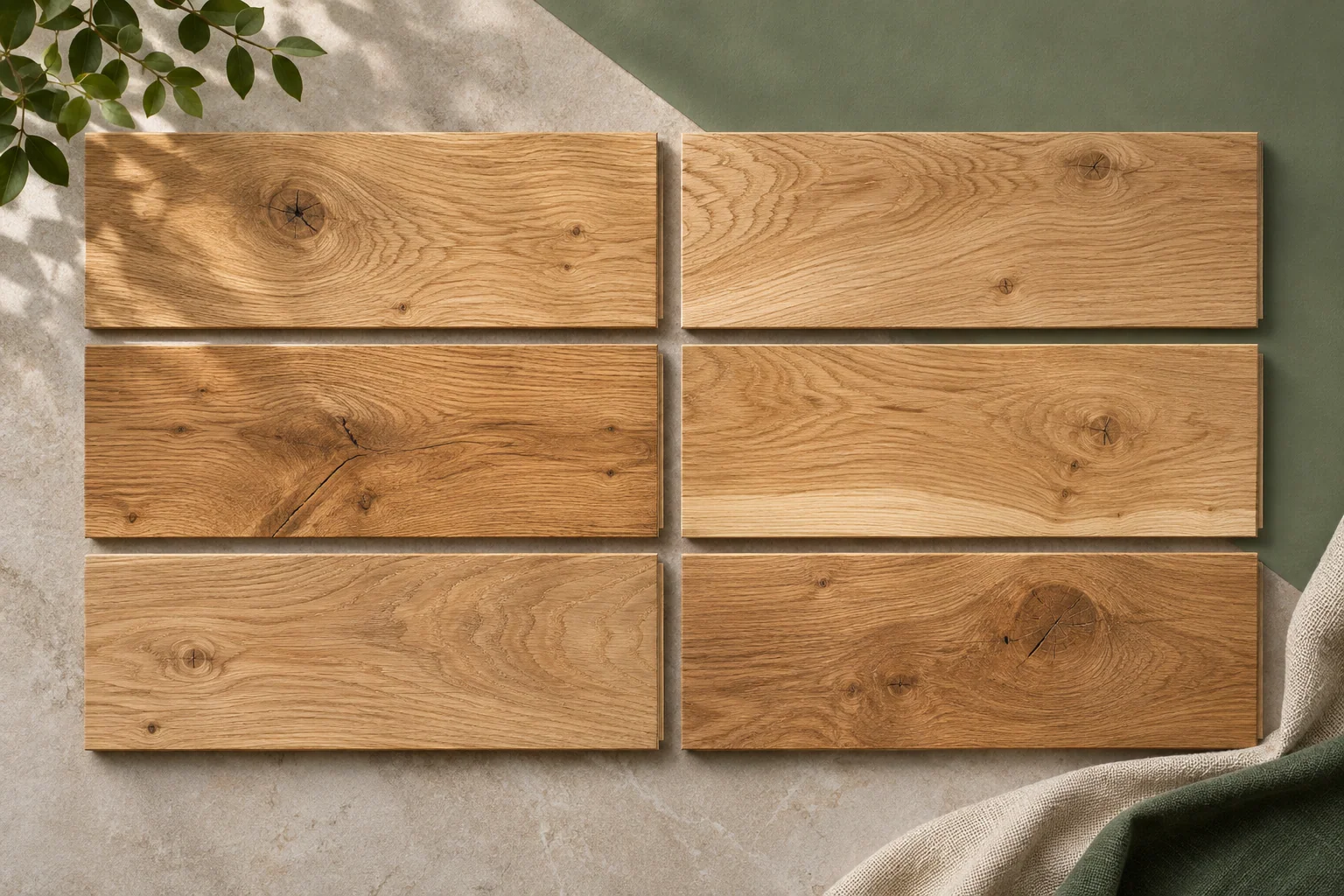
GoLink sorts oak veneers by appearance and develops samples around grain, knots, sapwood, filling and colour. Use brochure grade references with an agreed sample range.
Our production team hand-sorts kiln-dried oak veneers using A, B, C and D grades and checks veneer thickness. Appearance grading helps establish which natural features belong in a collection.
The standard pattern table uses selections such as AB, ABC, ABCD and CDE. These labels belong to the listed configurations; they do not provide universal limits for knots, sapwood or colour variation.
Knots and natural cracks contribute to wood character. GoLink repairs surface features with epoxy resin in eight shades, allowing the fill to become part of the surface appearance.
Review the size, distribution and contrast of natural features and fill on representative boards. Put the accepted range into the product record instead of assuming a grade abbreviation explains every visible detail.
Sapwood is naturally lighter timber that may contrast with adjacent wood. Board-to-board colour also reflects the timber itself and the chosen colour treatment; these are related visual effects with different causes.
Record sapwood preference and the accepted light-to-dark range as separate decisions. We can use that distinction in sample discussions without treating a colour target as a promise of identical boards.
| Feature | Appearance direction | Reference to agree with us |
|---|---|---|
| Quieter character | Less prominent natural contrast | Representative grain, knots and tonal range |
| Expressive character | More visible natural features | Knot distribution, filled features and contrast |
| Sapwood preference | The desired role of lighter natural timber | Examples of the accepted amount and visual relationship |
| Collection grade name | Your shorthand for the approved selection | Written criteria and an identified physical reference set |
The same knot or grain movement can read differently on a wide plank, a herringbone block or a chevron layout. A larger sample arrangement shows how the character is distributed across the floor.
Choose the species and format, then compare several boards in consistent light. Our free oak, teak and walnut sample options help begin the review; request the grade and format you need from sales.
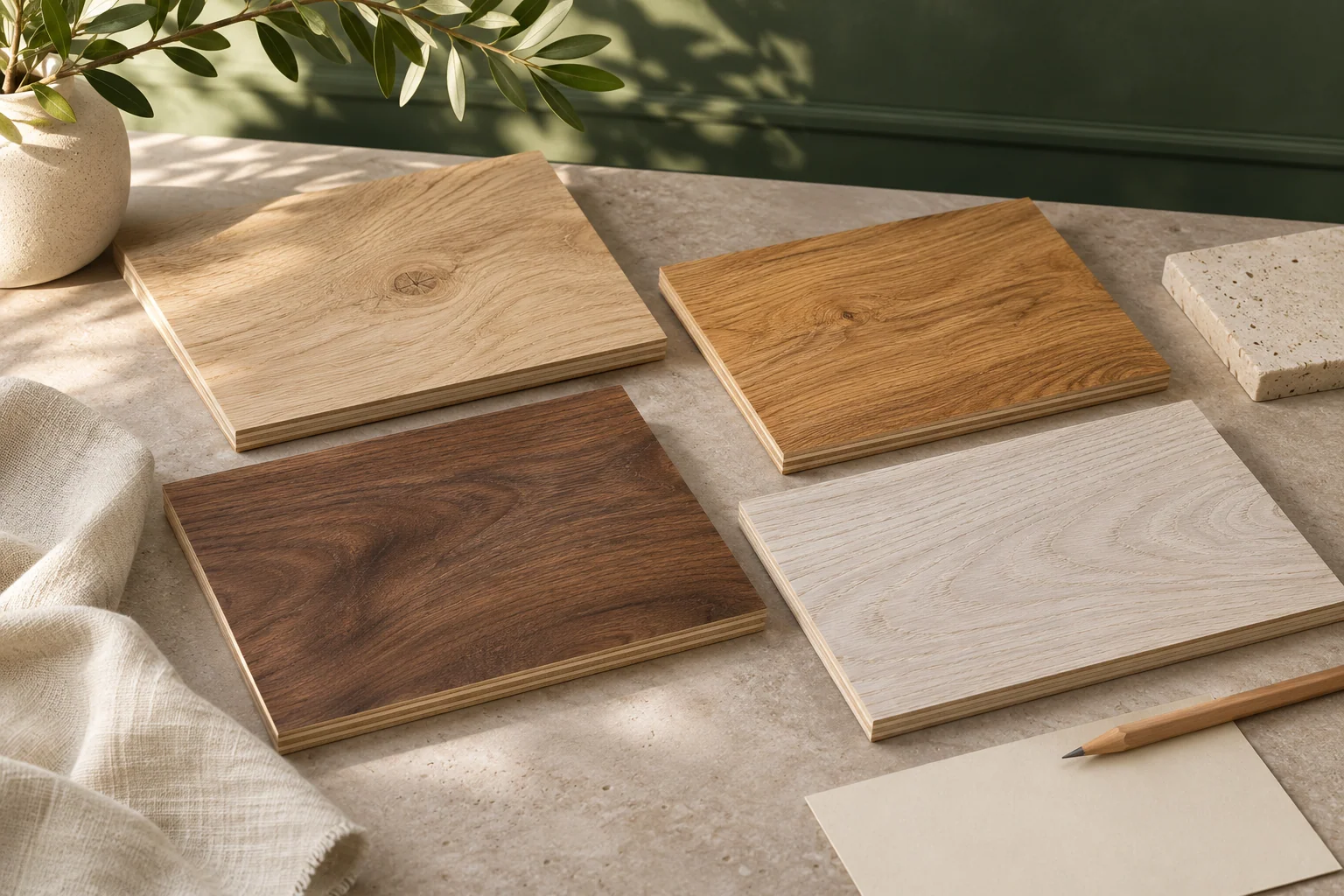
Send us a clear appearance brief before a sample range is approved. Agreed criteria and physical references should explain what your collection means by its grade name.
Use the approved sample range and written appearance record when reviewing a delivery. One board should be considered in the context of the agreed selection rather than compared only with a single colour chip.
If a concern arises, retain carton and order references and photograph the affected boards together. That gives us a defined product and appearance question to review with your team.
Cocoa-brown American walnut engineered planks with smooth grain and a natural-oil direction.
Explore american walnut cocoaWarm European oak engineered planks with lightly brushed grain and a natural-oil direction.
Explore european oak naturalHoney oak engineered herringbone with brushed texture and matte lacquer proposed.
Explore herringbone honey oakExplore Elements, Silence, Emerge, Create and Parquet, together with GoLink coating and texture options and 106 colour references explicitly listed in our brochure.
Explore engineered flooring collections, finishes & colour referencesChoose a focused sample set before committing to a collection or project specification.
Explore sample requestContact GoLink with the order reference, photographs and site records. Our brochure states a 25-year warranty for planks, chevron and herringbone; request the applicable written terms.
Explore golink flooring manufacturer after-sales supportExplore GoLink engineered flooring construction, 2–6 mm veneer options, available lengths and widths, and standard herringbone and chevron configurations listed in our brochure.
Explore engineered wood flooring construction & standard formatsShare appearance references, intended format and the natural character your buyers expect.
Discuss grading and samplesFrequently asked questions
Agreeing the natural character and variation of your flooring collection.
A grade label alone does not define every visible feature. Our standard pattern tables use selections including AB, ABC, ABCD and CDE, while the accepted sample range records the grain, knots, sapwood, filling and tone expected for your order. Agree those details rather than transferring another supplier’s grade limits.
Several boards show how natural features and colour vary across the accepted selection. A single clean piece cannot demonstrate the full appearance of a character grade. Review quieter and more featured boards together, then keep the representative range and written criteria with the product specification.
GoLink’s production process includes surface repairs using epoxy resin in eight shades. Review the size, distribution and contrast of filled features beside the surrounding wood. The accepted sample range should show the intended repair character, so filling is considered with the grade rather than treated as a separate colour decision.
A pale treatment changes the appearance but does not make natural grain, sapwood and knots disappear. Review the chosen grade after the intended treatment and coating. Record the acceptable light-to-dark range and feature character separately, because a colour name cannot establish a uniform board selection.